
We Analyzed Yahoo Shopping. The Biggest Challenge May Not Traffic.
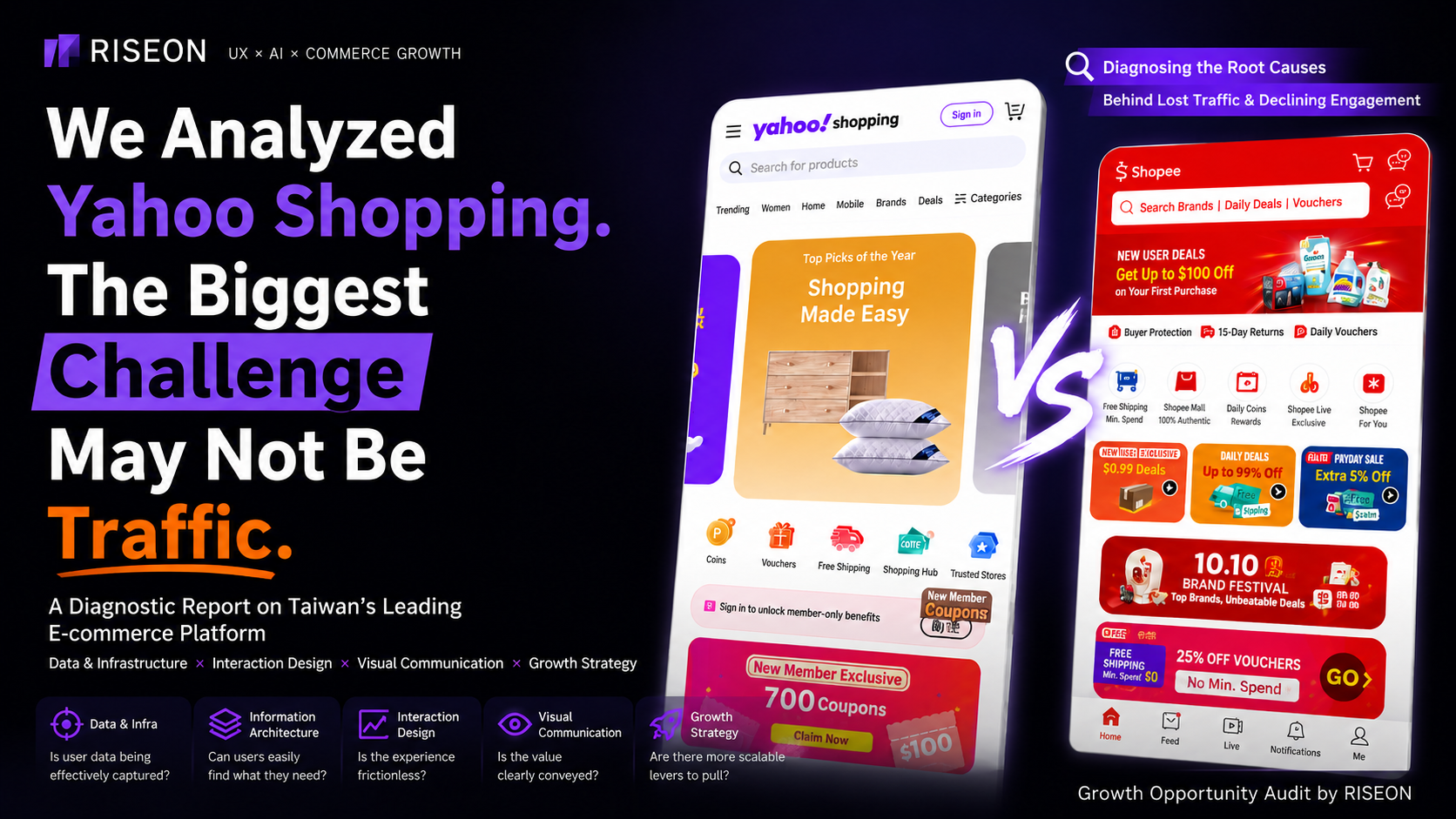
More subsidies.
Lower prices.
More advertising.
More traffic.
At first glance, the narrative feels obvious.
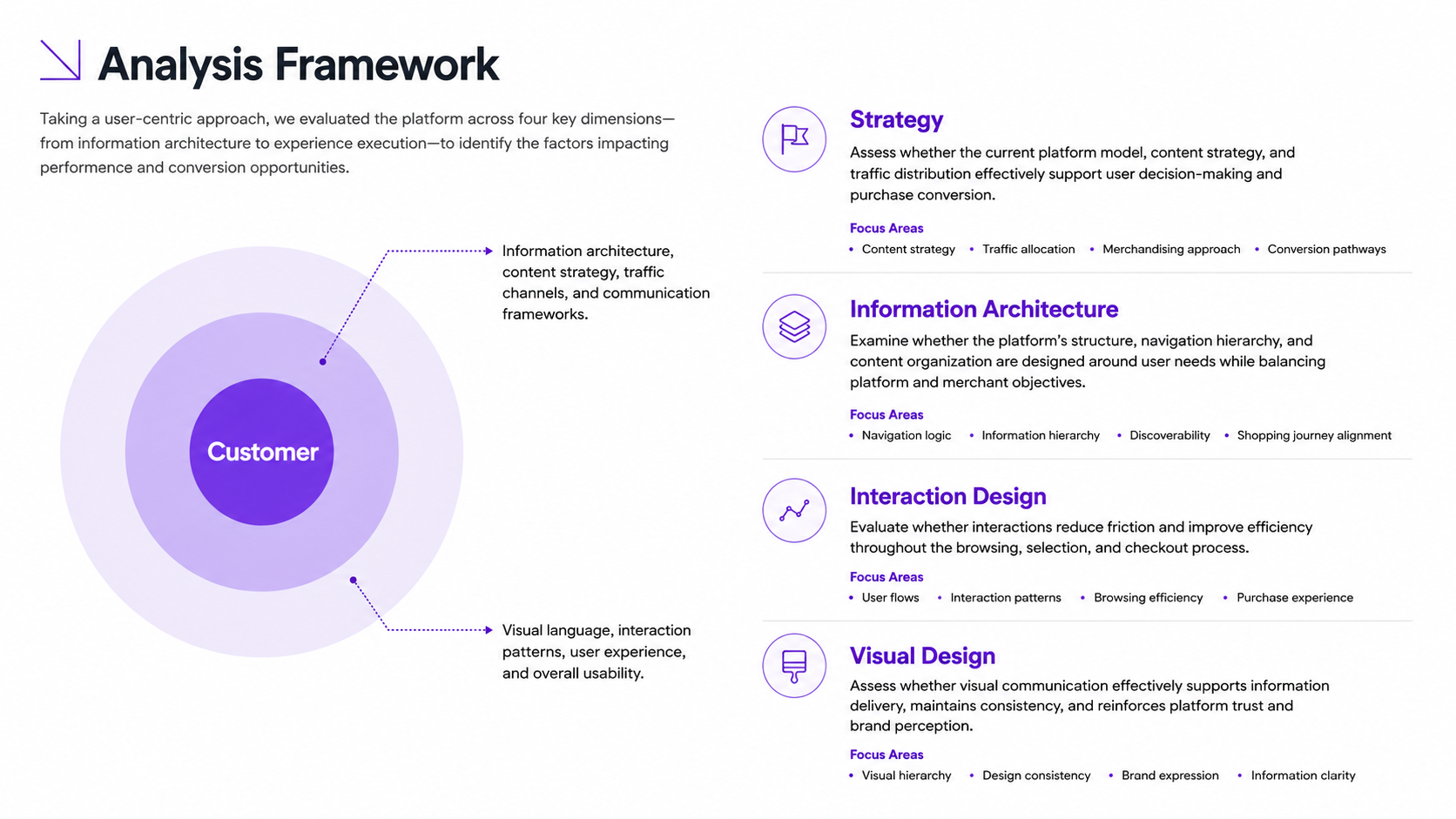
But after applying the RISEON Growth Audit Framework to evaluate Yahoo Shopping through the lenses of user behavior, information architecture, conversion efficiency, and commercial strategy, we arrived at a different perspective:
Yahoo's challenge may not be acquiring traffic. It may be capturing value from the traffic it already has.
Traffic Is Not the Problem
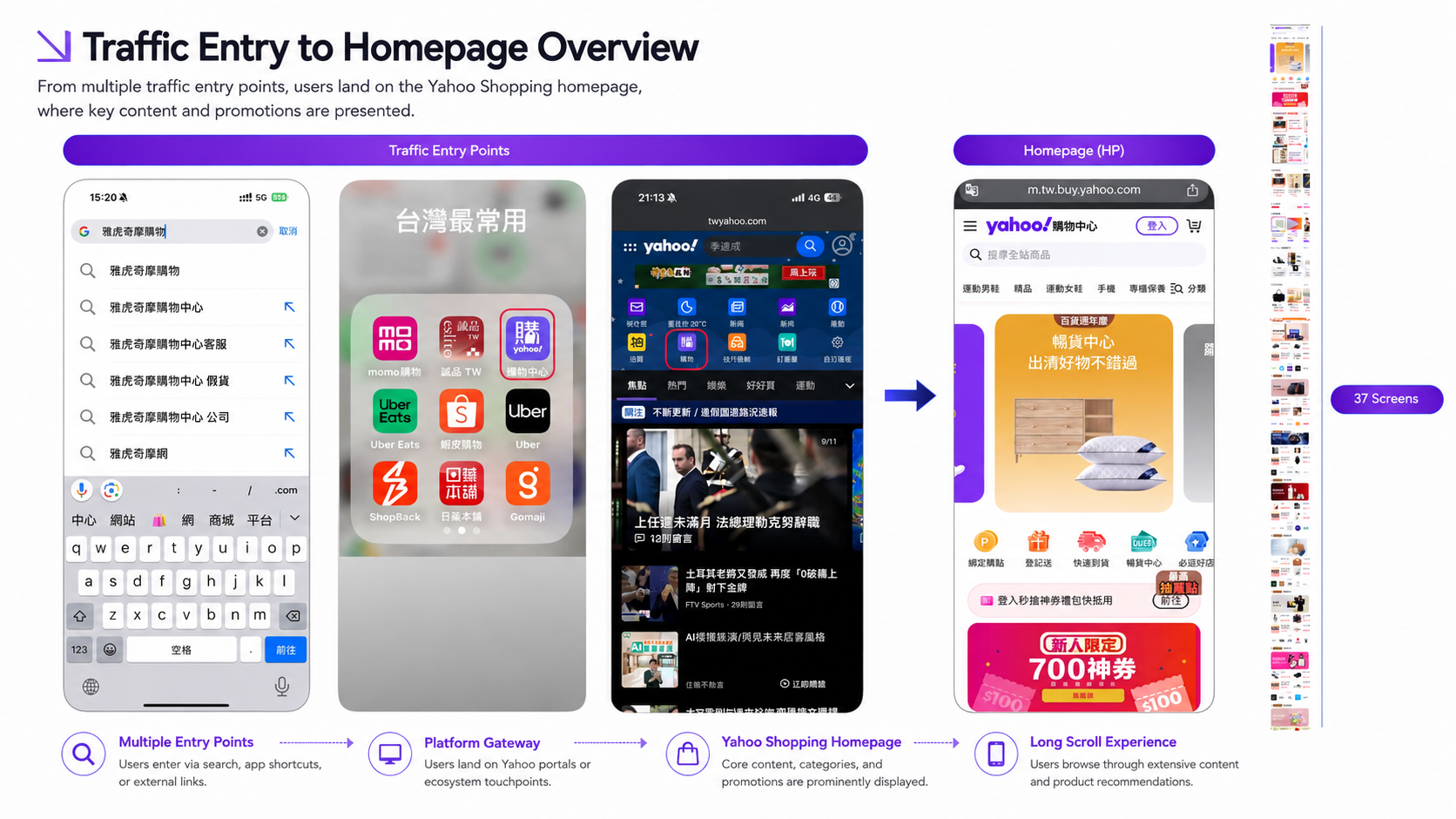
Yahoo still owns one of the most powerful digital ecosystems in Taiwan.
Users continue to enter Yahoo Shopping through multiple touchpoints:
- Search
- Yahoo News
- Yahoo App
- Campaign and brand-driven traffic
The audience is still there.
The question is what happens after they arrive.
Because traffic alone has never been the goal.
Growth happens when attention turns into engagement, and engagement turns into action.
The Homepage Is a Conversion Engine, Not a Content Container
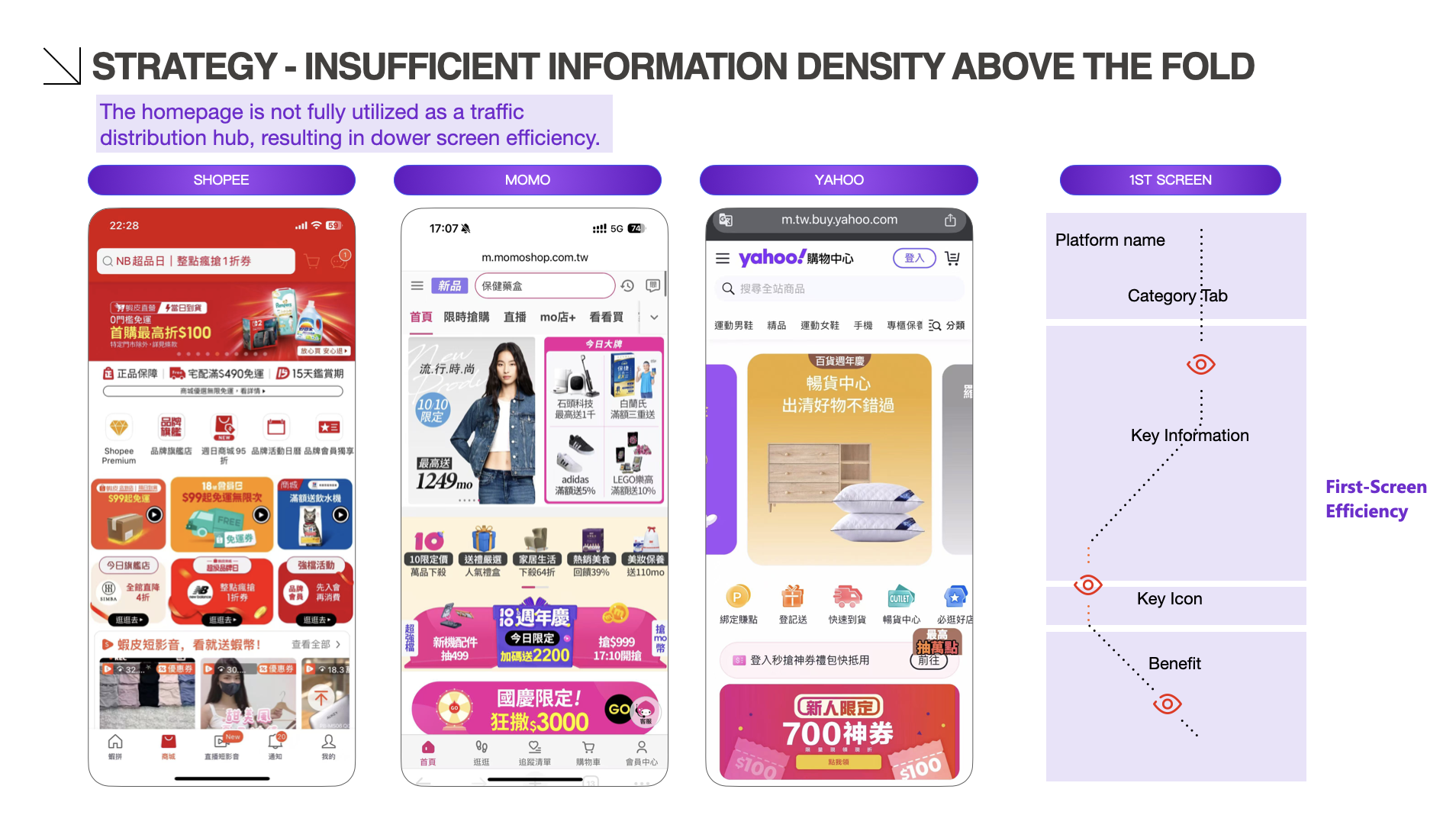
When comparing Yahoo Shopping, Shopee, and Momo side by side, one pattern becomes immediately visible.
Shopee and Momo use their most valuable real estate—the first screen—to answer three questions instantly:
- What matters today?
- What is worth exploring?
- Why should I stay?
They are not simply presenting content.
They are communicating value.
The experience is designed to create momentum.
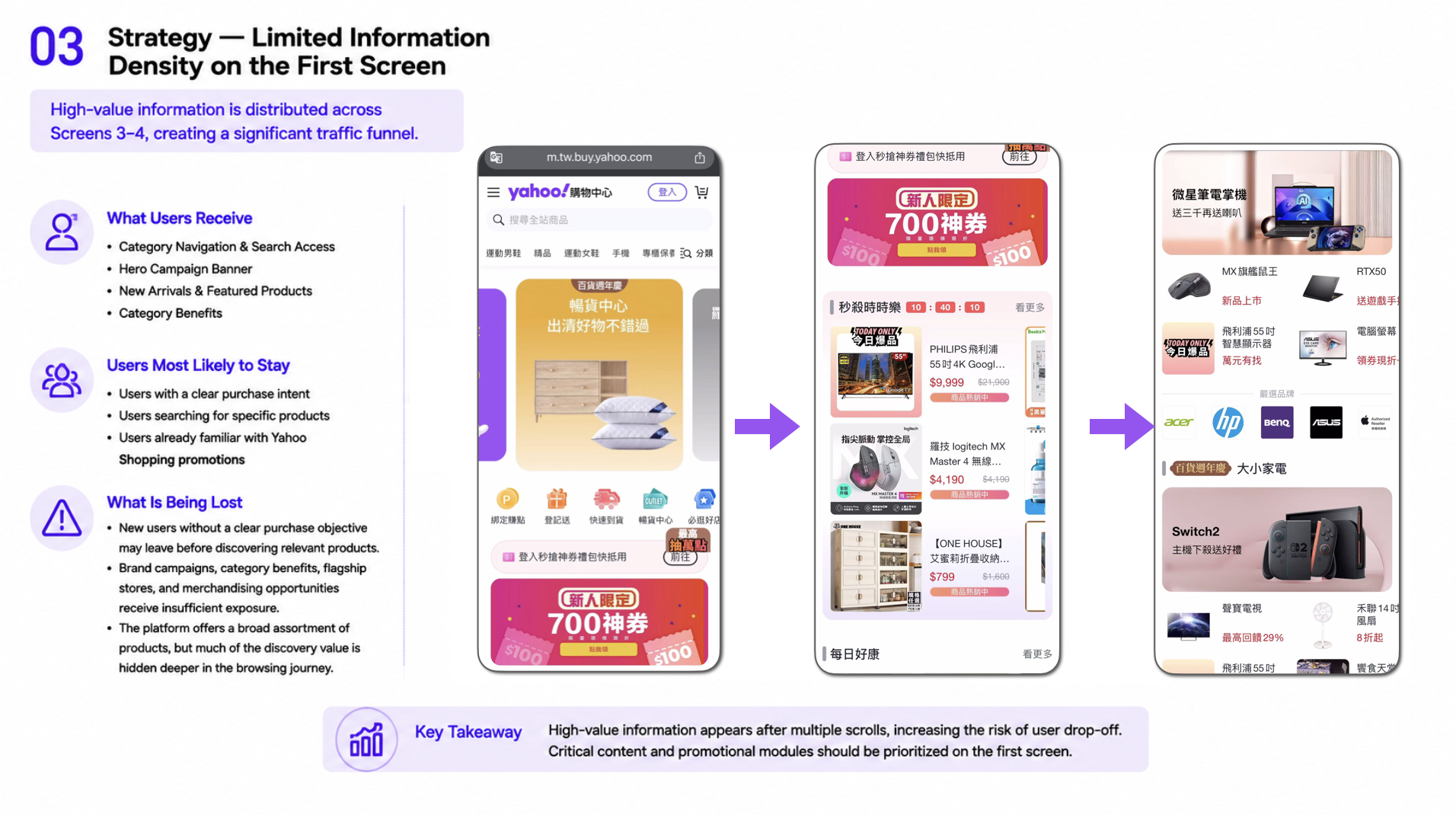
Yahoo's homepage, by contrast, presents a broader collection of information:
- Categories
- Promotional banners
- Search entry points
Yet the primary commercial message is often less explicit.
For many users, it is not immediately clear where the greatest value lies at that moment.
From a growth perspective, the homepage is not merely a destination.
It is a traffic-capture system.
If attention is not secured in the first few seconds, every subsequent experience becomes less effective.
The Most Valuable Information Appears Too Late
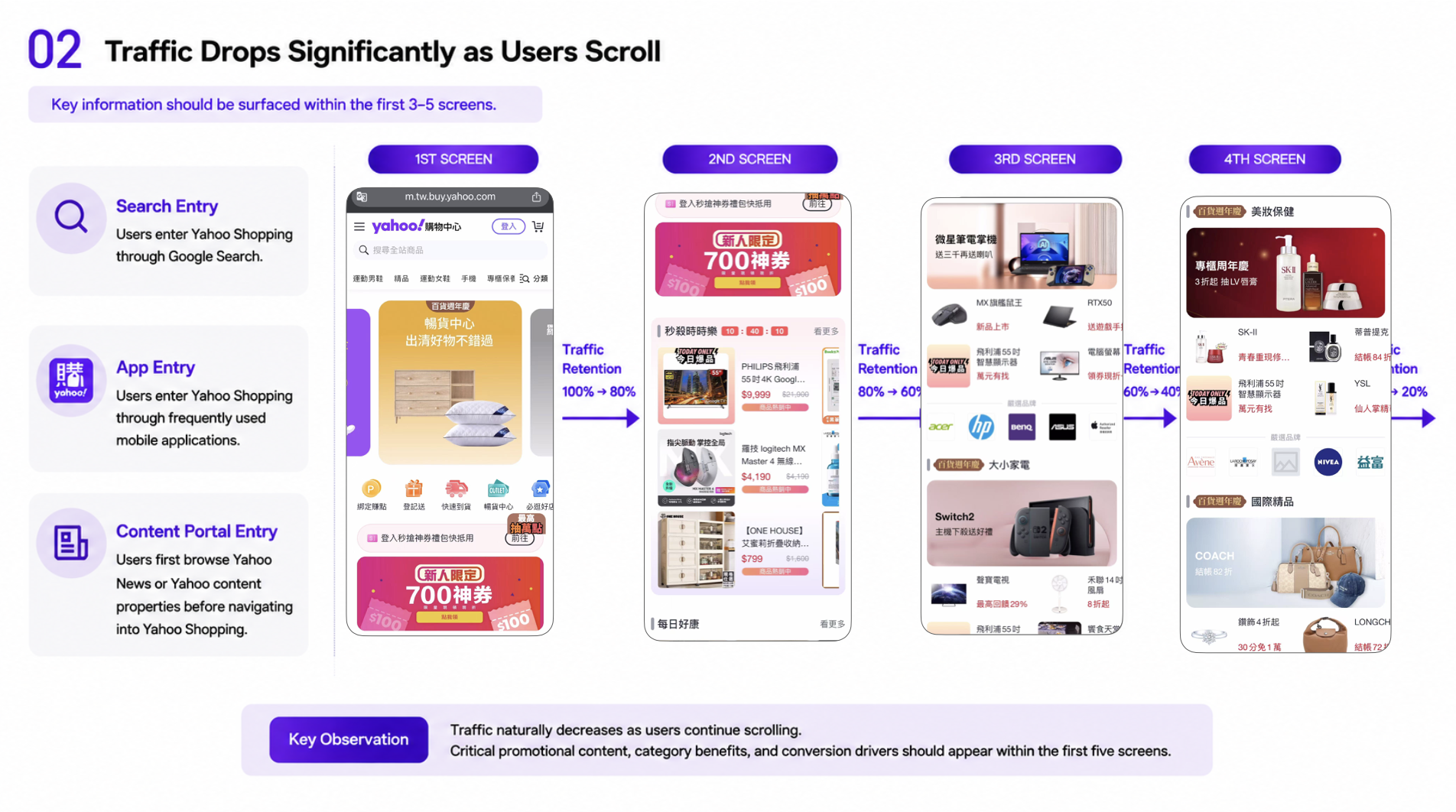
One of the most interesting observations from our audit emerged when we mapped content visibility across the homepage.
The elements users care most about—such as:
- Official flagship stores
- Brand campaigns
- Category benefits
- Trending products
- New arrivals
often appear several screens below the fold.
The challenge is not content quality.
The challenge is discoverability.
In digital commerce, information that cannot be seen might as well not exist.
Consumer Behavior Has Changed
Many commerce experiences are still designed around a model that worked exceptionally well ten years ago:
Search → Product → Purchase
The assumption was simple:
Consumers knew what they wanted.
Platforms simply helped them find it.
Today, discovery increasingly precedes intent.
Purchases are now influenced by:
Discovery → Recommendation → Content → Community → Commerce
Consumers are often inspired before they decide to buy.
This shift has already reshaped platforms such as:
- TikTok Shop
- Douyin Commerce
- Xiaohongshu
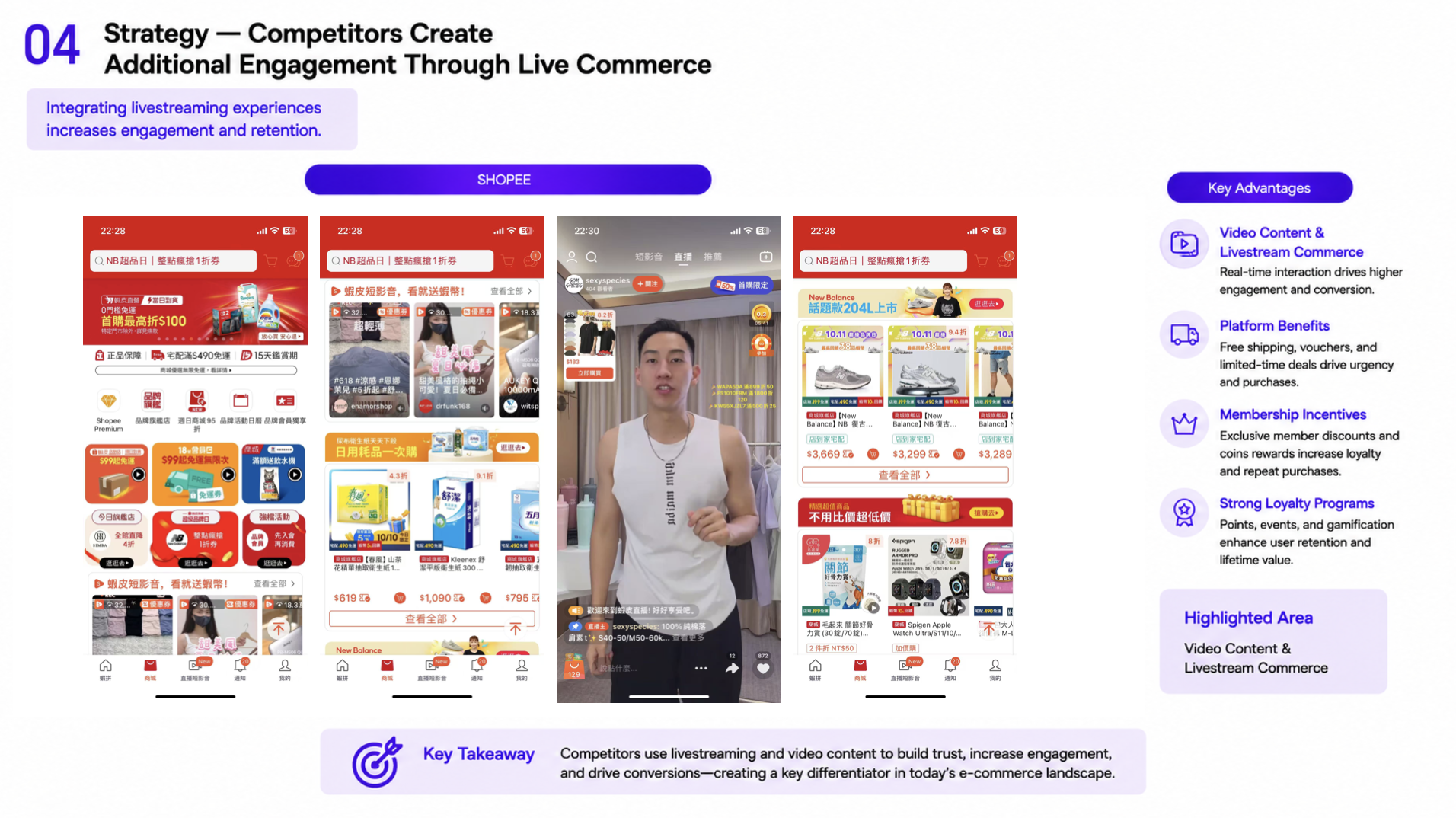
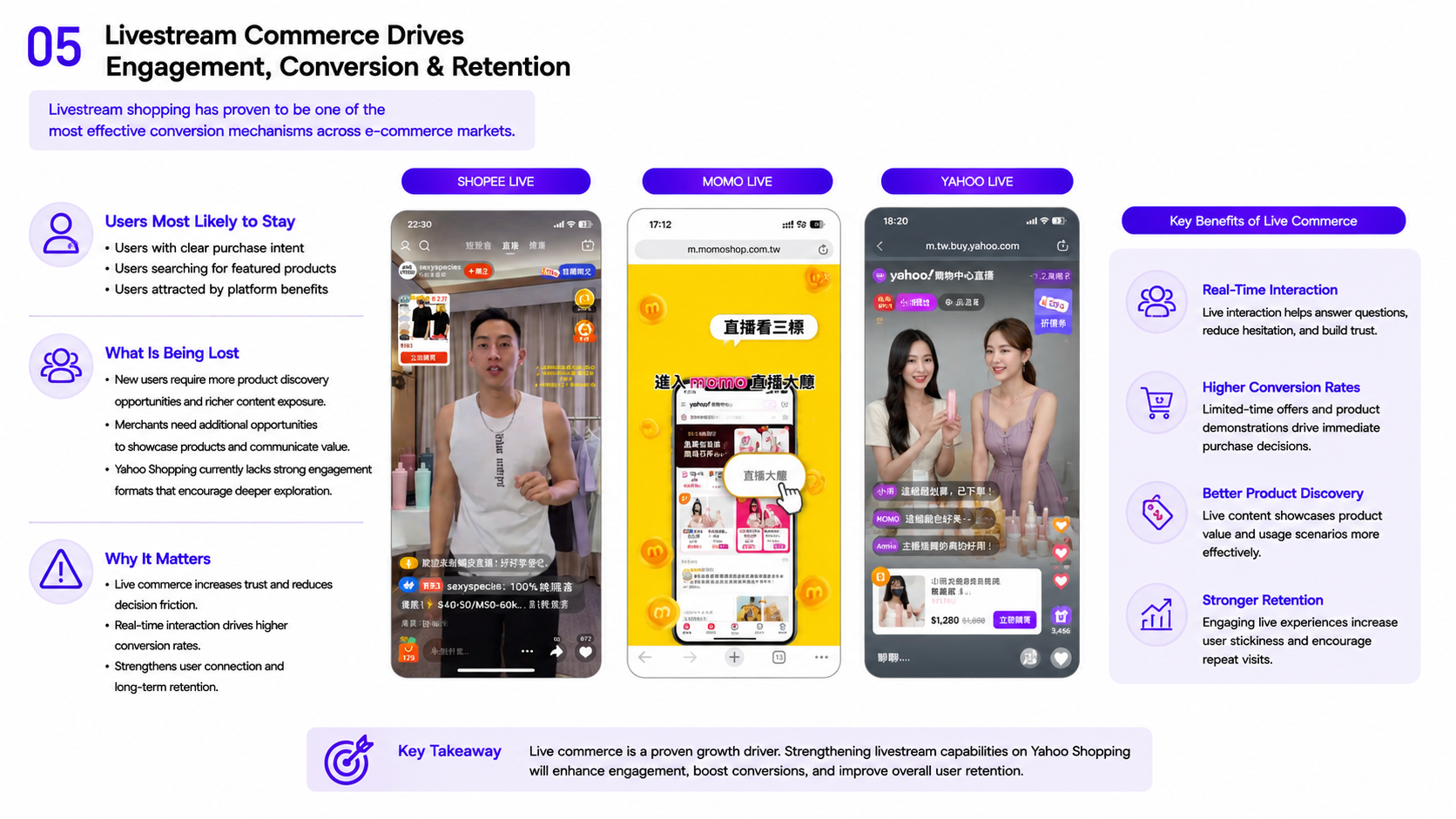
- Shopee Live
The commerce landscape is no longer driven solely by search.
It is increasingly driven by discovery.
Shopee's Advantage May Not Be Price
Price is often cited as Shopee's greatest competitive strength.
But price may be the outcome rather than the cause.
What Shopee consistently demonstrates is the ability to capture and sustain user attention.
The platform behaves increasingly like a content ecosystem rather than a traditional marketplace.
Because the scarcest resource in digital commerce today is not products.
It is not even traffic.
It is attention.
The platforms that earn more attention create more opportunities for consideration, engagement, and ultimately conversion.
Got value from this article?
Share the insight with your network.



.avif)