REIMAGINING FRAGRANCE THROUGH MULTI-SENSORY DESIGN — FROM SCENT TO IMMERSIVE PERCEPTION.
The Invisible
Scent is invisible, yet deeply emotional. It lives in memory, in atmosphere, in feeling.
But in digital space, it disappears— reduced to descriptions, notes, and static imagery. Something inherently sensory becomes abstract.
The Gap
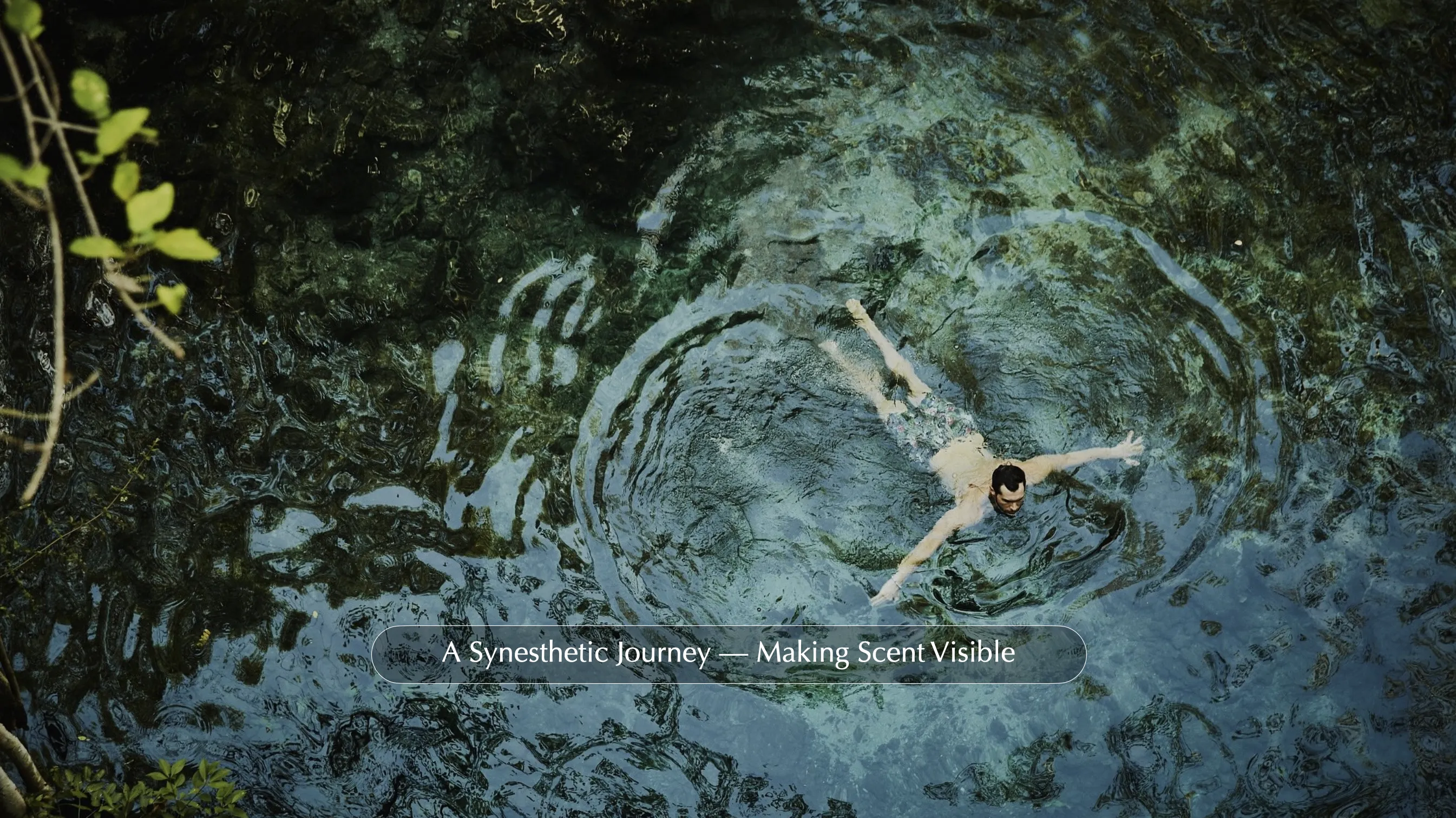
Fragrance is meant to be experienced, not explained.
Yet online, users are asked to imagine it—to translate words into perception.
This gap between sensing and understanding limits both connection and discovery.
The Shift
We approached fragrance differently.
Instead of describing scent, we explored how it could be perceived through other senses.
Not by replicating smell, but by evoking it.


The Problem
Fragrance is the lowest-converting category in online beauty retail. The reason is straightforward: consumers are reluctant to purchase a scent they cannot smell.
The industry response has been more copy, better photography, and detailed scent notes. These are information solutions to a sensory problem. They do not address the fundamental gap.
The Question
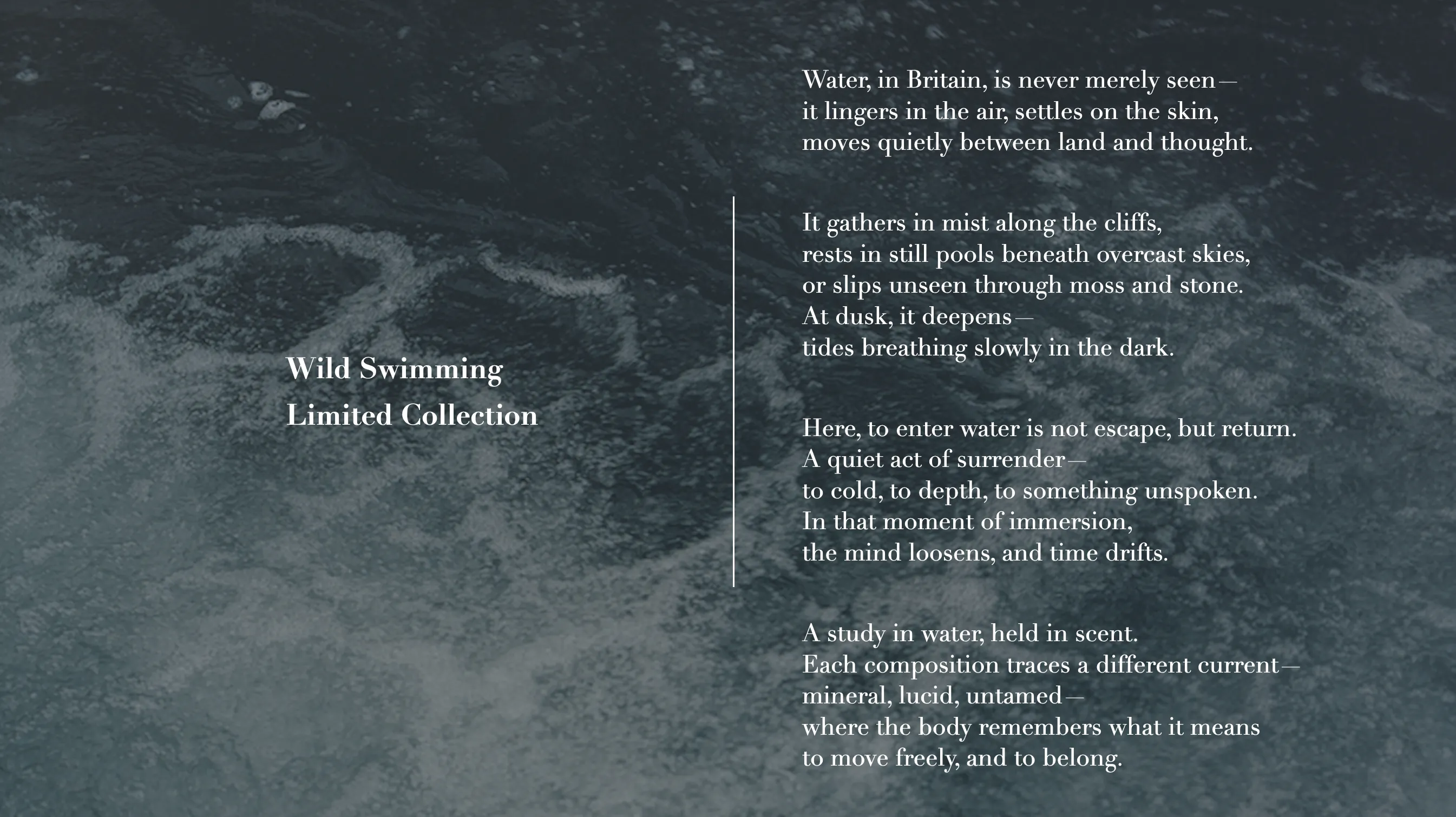
When Jo Malone launched the Wild Swimming Limited Collection — five aquatic scents inspired by British waterscapes — we reframed the brief entirely.
Not: how do we describe these fragrances?But: how do we make someone feel what it is like to enter the water?
These are different design problems. They require different answers.
What We Built
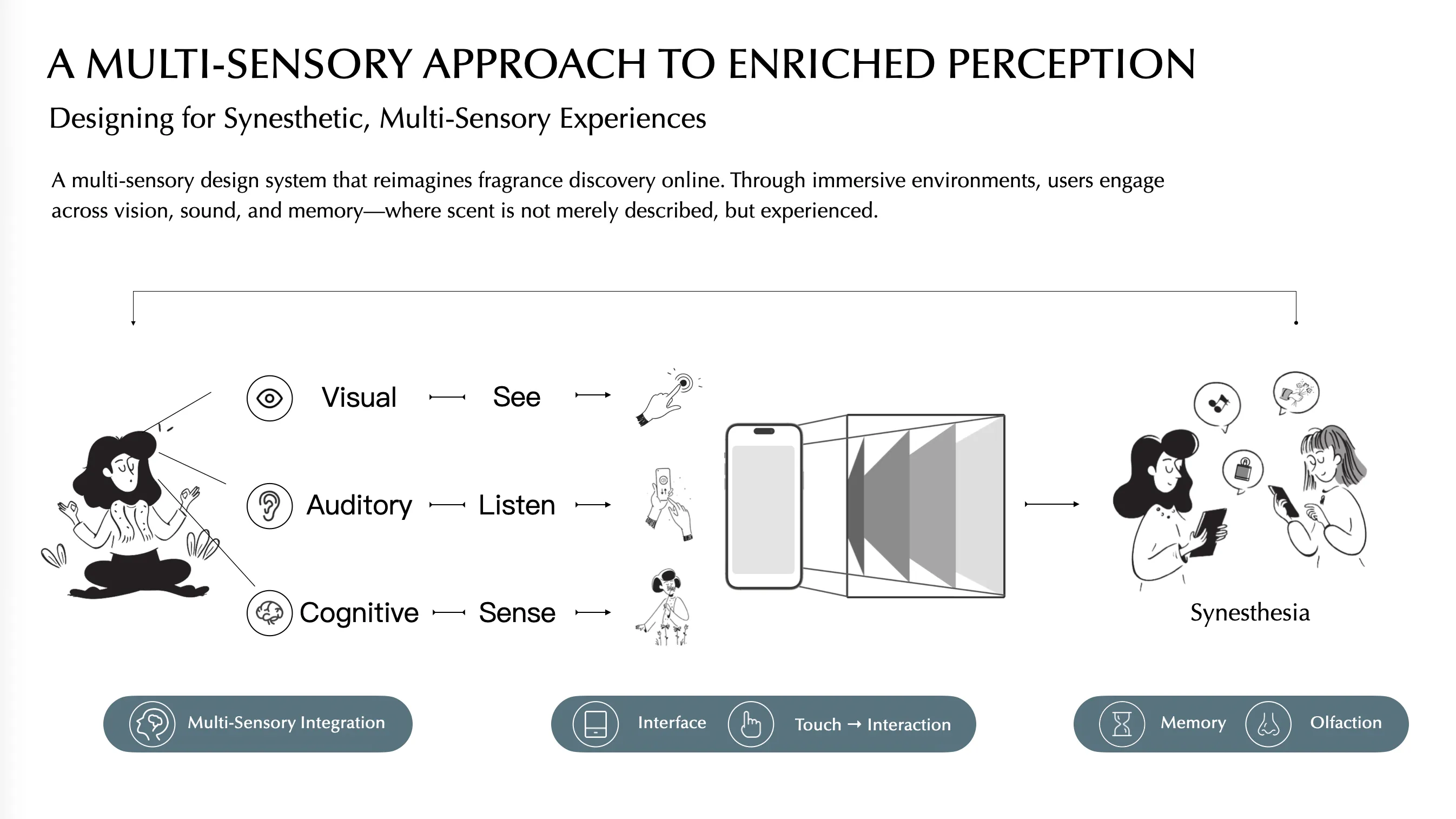
A multi-sensory design system operating across three dimensions — visual, auditory, and interactive — working simultaneously to create the sensation of immersion.
Users do not browse a product page. They move through an environment. Water becomes visual language. Natural soundscapes become emotional context. Interaction becomes the trigger for memory and association.
Scent remains invisible. The feeling does not.
Why This Matters
When experience replaces information, dwell time increases. Brand connection deepens. Purchase confidence grows.
This is not a more beautiful product page. It is a design system that directly addresses the core conversion barrier in fragrance retail.
A project of this scope is available at a fraction of traditional production cost. Let's talk.
At Riseon, we design for the gap between what a brand wants to communicate and what a consumer actually experiences. This is one example of what that looks like in practice.
Creative Direction: Riseon Design
Project Type: Creative Exploration
Scope: Experience Design · Multi-Sensory Interaction · E-commerce Content Strategy